
Yamaha P-45B Digital Piano
A trusted entry-level full-size digital piano with weighted keys and authentic feel—perfect for practice with headphones.
View on Amazon
Impact-Site-Verification: 5e7ae78f-1966-47cd-af4f-eaefa912ac18
Learning the piano is one of the most rewarding hobbies for people of all ages. The instrument is wonderfully approachable: there is no reed to fuss with, no strings to tune before every session, and the notes are laid out clearly in front of you. Press a key and you get a clean, reliable sound, which helps beginners build confidence quickly. That simplicity at the point of contact is what makes the piano such a friendly place to start.
New players usually weigh up a digital keyboard versus an acoustic upright. A quality digital piano keeps costs sensible, fits neatly into small British homes, and allows quiet practice with headphones—ideal for flats or late-evening sessions. Many models include built-in metronomes, simple recording, and learning modes that make early practice engaging rather than intimidating.
An acoustic upright, meanwhile, offers the tactile “feel” that pianists rave about: the natural weight of the keys, the resonance of the soundboard, and the subtle control over tone and dynamics. It takes more space, needs occasional professional tuning, and is heavier to move, but it rewards you with richness and nuance that can be addictive once experienced.
The truth is there’s no wrong choice. The “best” instrument is the one you will sit down at most often. Even ten minutes a day, reliably, can produce surprising progress; simple melodies in the first weeks grow into short pieces within months, and the habit soon becomes part of a calming daily rhythm. Over time, your piano becomes a companion for quiet evenings, a creative outlet on rainy weekends, and a source of pride when you share a tune with family and friends. Choose an instrument that makes you want to play today, and let the journey unfold from there.
The benefits of learning piano reach far beyond the music itself. At a practical level, regular practice develops discipline, patience, and problem-solving. You break a piece into small chunks, repeat them thoughtfully, and then assemble everything into a coherent whole. This mirrors the way we approach big tasks in everyday life, turning something daunting into a chain of manageable wins. Children carry these habits into schoolwork; adults find their focus sharper and their concentration more resilient.
Cognitively, the piano is a superb workout. Reading notation asks your eyes to decode symbols while your brain directs two hands performing different actions; memory, coordination, and timing all collaborate in real time. This kind of bilateral activity has been linked to improvements in spatial reasoning and language processing, and many adults report that it keeps the mind lively and attentive.
Then there is the emotional reward. Sitting at the keys after a long day offers a gentle reset: tension softens as you play a favourite tune or explore a new piece slowly. Music gives voice to moods that are otherwise hard to express, which is particularly helpful for children who are still finding their words. The sense of progress—today a scale hands together, next month a short piece from memory—builds confidence in a steady, tangible way.
Socially, the instrument opens doors. The piano pairs beautifully with singers, strings, and choirs; it’s equally at home in a living-room sing-along, a school concert, or a church service. Being “the pianist” often makes you the glue that brings people together. Most of all, the piano nurtures a lifelong love of music. Whether your taste runs to Chopin, jazz standards, film themes, or simple folk tunes, the piano adapts. It grows with you, continually offering fresh challenges and fresh joy.
Early on you’ll meet two ways of naming notes. The first is the letter system, which labels notes A through G and then repeats across the keyboard. In much of Europe there’s a twist: “B” usually means B-flat, while “H” denotes the natural B. If you ever see a “H” in German scores, that’s what’s going on. The letter system is the backbone of sheet music, chord symbols, and scale names, so every pianist needs to be comfortable with it.
The second is the sol-fa system—the familiar do-re-mi. Each syllable represents a step of the scale, which makes it brilliant for ear training. Because the syllables are tied to function (do feels like “home”, so-mi outlines a friendly call-and-response), learners begin to hear relationships rather than isolated notes. That skill pays off when you want to play by ear, transpose a tune, or improvise simple harmonies.
Which should you use? Both, ideally. Think of the letter system as your precise map—perfect for reading scores, discussing chords, and understanding theory. Use sol-fa as your internal compass—great for singing intervals, sensing key changes, and building a reliable musical “ear”. Many teachers blend them: letter names for accuracy at the keyboard; do-re-mi for singing and aural work away from it.
If you’re teaching yourself, try a simple routine. When you learn a piece, speak or sing the letter names slowly as you place your fingers, then repeat the passage singing do-re-mi. Over time you’ll feel both systems reinforcing each other: your reading becomes quicker, and your musical intuition grows. Fluency in these two approaches makes you more versatile, whether you’re decoding a Bach prelude, accompanying a folk singer, or experimenting with jazz chords on a quiet Sunday afternoon.
Every pianist—beginners and advanced players alike—hits sticky moments. Perhaps your left hand refuses to behave, a rhythm keeps slipping, or a page of notation looks like a tangle of spiders. None of this means you’re “not musical”. It simply means your brain is building new connections, and that takes time.
Start by slowing down—properly slow. Practise hands separately until each feels calm and easy. Then combine them at a tempo that feels almost too slow, using a metronome to keep you honest. Don’t be tempted to rush the easy bars and hesitate at the tricky ones; steady beats reveal exactly where the work is needed and protect you from learning mistakes you’ll later have to unlearn.
Reading is another hurdle. There’s a lot on the page: notes, accidentals, dynamics, articulation, tempo marks. Break the score into tiny sections—two to four bars—and aim for secure progress, not speed. Over time your reading will accelerate naturally, just as reading a new language does. Celebrate small wins: a clean scale hands together, a tricky bar conquered, a tune played from memory for someone you love.
Finally, guard your motivation. Most learners experience a plateau after the first burst of progress. Choose short pieces you genuinely enjoy, set modest weekly goals, and mix “work” with “fun”—five minutes of scales followed by five minutes playing a favourite song. Remember: every pianist you admire once wrestled with the same problems. Patience, clear routines, and a sense of humour carry you through to the satisfying point where difficult passages begin to feel natural.
A trusted entry-level full-size digital piano with weighted keys and authentic feel—perfect for practice with headphones.
View on Amazon
Sturdy, height-adjustable piano stool with padded seat—suitable for children and adults for correct playing posture.
View on Amazon
A comprehensive method combining lessons, theory, and technique in one volume—ideal for self-learning or with a teacher.
View on Amazon
Universal sustain pedal with realistic piano feel and polarity switch—an essential accessory for expressive playing.
View on Amazon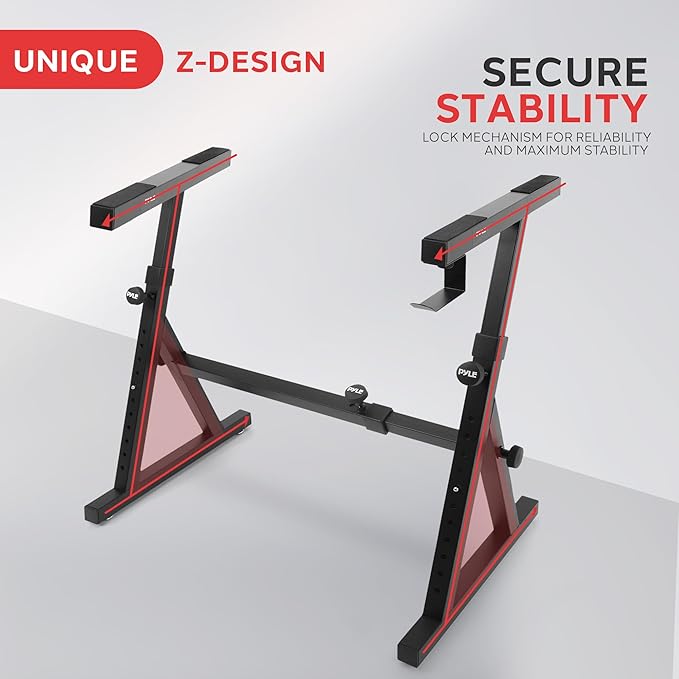
Strong, height-adjustable folding Z-stand—provides stable support for digital pianos and keyboards of all sizes.
View on Amazon